
Australia's 2025 Crypto Consumer Protection Rules Explained
Crypto Platform Licensing Eligibility Calculator
Check Your Platform's Eligibility
Determine if your crypto platform qualifies for Australia's low-risk exemption under the 2025 Consumer Protection Rules. This exemption applies if you meet both threshold requirements:
• Maximum $5,000 customer exposure
• Annual transaction volume under $10 million
Australia is on the brink of a major overhaul for crypto investors. The government’s Treasury Laws Amendment Bill 2025 introduces a unified licensing regime that could finally give users the safety net many have been demanding. Below you’ll find a step‑by‑step look at what’s changing, who needs a licence, and how everyday traders can protect themselves.
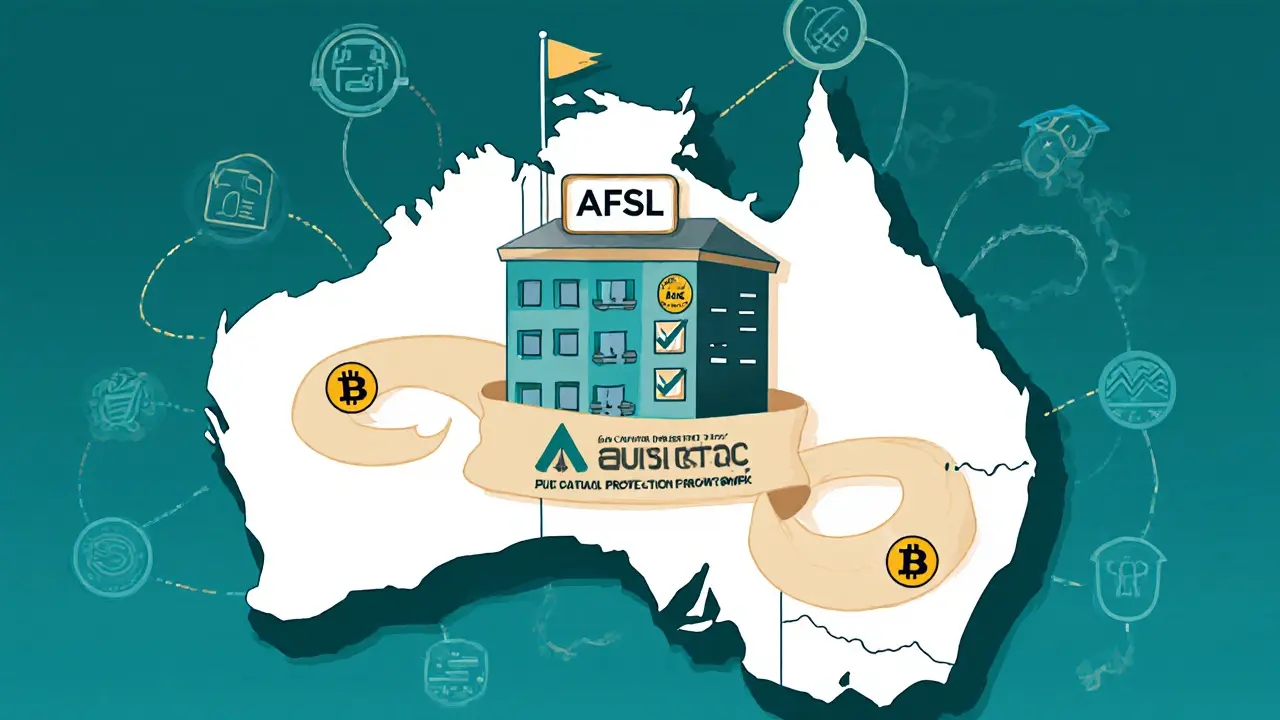
Australian Crypto Consumer Protection Framework is the collection of rules, licensing requirements, and enforcement tools introduced by the 2025 Treasury Laws Amendment Bill to bring digital‑asset platforms under the Corporations Act 2001.Why a new framework was needed
Prior to 2025, crypto regulation in Australia was a patchwork: AUSTRAC handled anti‑money‑laundering (AML) registration, while ASIC policed any asset deemed a financial product. The split left consumers confused about where to turn when things went wrong. The 2022 FTX collapse highlighted these gaps, prompting a “token mapping” exercise in 2023 and ultimately the draft bill that aims to close the loopholes.
Two new product categories
The bill adds two distinct categories to the Corporations Act:
- Digital Asset Platforms (DAP) - exchanges or marketplaces that let users buy, sell, or trade crypto‑assets.
- Tokenised Custody Platforms (TCP) - services that store or safeguard tokenised assets on behalf of clients.
Collectively, they are referred to as “crypto platforms.” Both must obtain an Australian Financial Services Licence (AFSL), which brings them under the same conduct and disclosure rules that apply to traditional finance firms.
Key licensing obligations
- Maintain a comprehensive AML/CTF program - including transaction monitoring, suspicious activity reporting, and record‑keeping for AUSTRAC.
- Implement KYC procedures - verify customer identities before allowing trades.
- Publish clear, non‑misleading product disclosures in line with the Australian Consumer Law.
- Appoint a competent manager who meets ASIC’s training and competence standards.
- Provide an internal dispute‑resolution (IDR) process and contribute to the ASIC‑run Financial Claims Scheme for compensation where appropriate.
Failure to comply can trigger penalties of $16.5 million or more, signalling the government’s seriousness about protecting retail investors.
Exemptions for low‑risk operators
Not every platform will need a full licence. The bill carves out a “low‑risk” exemption for operators that meet both of the following thresholds:
- Less than $5,000 per customer exposure.
- Annual transaction volume under $10 million.
These smaller players can continue operating without an AFSL, but they must still register with AUSTRAC and obey AML/CTF rules.

What assets fall under the new rules?
The legislation casts a wide net:
- Bitcoin and other commodity‑like tokens.
- NFTs when they are treated as collectibles or investment assets (gaming‑only NFTs are excluded).
- Stablecoins and tokenised securities, which behave more like bearer instruments.
Token issuers themselves are not directly regulated by the bill; the focus is on the platforms that enable trading or custody.
Consumer‑focused safeguards
Beyond licensing, the framework strengthens several consumer‑centred protections:
- Conduct and disclosure duties - platforms must provide plain‑language risk warnings, fee breakdowns, and clear terms of service.
- Compensation arrangements - licensed platforms are required to hold insurance or contribute to the ASIC Compensation Scheme, giving consumers a safety net if the firm becomes insolvent.
- Dispute‑resolution pathways - an internal IDR must be offered, and unresolved complaints can be escalated to the Australian Financial Complaints Authority (AFCA).
- Marketing oversight - misleading or deceptive advertising is prohibited under the Australian Consumer Law, even for assets that are not classified as financial products.
For everyday traders, these measures mean more transparency, a clearer route to recourse, and reduced chances of “vanishing” platforms.
Impact on crypto businesses
Industry reaction has been largely supportive. Exchanges such as Independent Reserve and BTC Markets see the certainty as a growth catalyst, despite higher compliance costs. OKX Australia’s CEO Kate Cooper called the bill “the clearest signal yet that crypto is now embedded in the financial system.”
Key challenges for firms include:
- Hiring staff that satisfy ASIC’s competence standards.
- Investing in AML/CTF technology capable of real‑time monitoring.
- Re‑designing marketing material to pass the stricter “no‑misleading‑representation” test.
Unlicensed rivals that try to undercut prices could face heavy enforcement actions, creating a level playing field for compliant operators.

What should Australian crypto users do now?
Even before the bill is fully enacted, consumers can protect themselves by following a simple checklist:
- Verify that the platform holds a valid AFSL. The licence number is usually listed in the site footer or the ASIC register.
- Check for AUSTRAC registration - a mandatory requirement for any digital‑currency exchange since 2018.
- Read the platform’s risk disclosure and fee schedule. Look for plain‑language explanations rather than dense legalese.
- Confirm that the platform offers an internal dispute‑resolution process and that it contributes to the AFCA scheme.
- Stay alert for marketing that promises guaranteed returns or “no‑risk” crypto investments - these are red flags under the Australian Consumer Law.
By taking these steps, traders can benefit from the forthcoming protections while avoiding common scams.
Future outlook
The draft legislation positions Australia as a progressive regulator, balancing innovation with consumer safety. If enforcement is robust, the market could see increased institutional participation, higher liquidity, and more mainstream acceptance of digital assets. Conversely, lax enforcement could allow unlicensed operators to erode confidence. The next few months will be telling as the government finalises the rules and ASIC begins issuing licences.
Quick reference table
| Feature | Licensed Platform (DAP/TCP) | Low‑Risk Exempt Platform |
|---|---|---|
| AFSL required | Yes | No |
| Annual transaction limit | Unlimited | ≤ $10 million |
| Customer exposure cap | None | ≤ $5,000 per customer |
| Compensation scheme | Mandatory participation | Not required |
| AML/CTF registration | Required (AUSTRAC) | Required (AUSTRAC) |
| Marketing scrutiny | Subject to ASIC and ACL | Subject to ACL only |
Frequently Asked Questions
Do I need to check a crypto exchange’s AFSL before trading?
Yes. A valid AFSL shows the platform is subject to ASIC’s conduct rules, which include dispute‑resolution and compensation requirements.
What happens if an unlicensed platform collapses?
Consumers may have limited recourse. Without AFSL‑mandated compensation, they rely on the platform’s own terms, which often leave users uncovered.
Are NFTs used in video games covered by the new rules?
No. Gaming‑only NFTs are exempt; the framework focuses on trading and custody platforms, not on in‑game items.
How does the low‑risk exemption affect my safety?
Exempt platforms still must register with AUSTRAC and follow AML/CTF rules, but they are not required to hold insurance or contribute to the ASIC compensation scheme, so your protection is weaker.
When will the new licensing rules take effect?
The bill is in public consultation until 24 Oct 2025. Final legislation is expected in early 2026, with a phased rollout for licences over the following 12 months.
With the crypto consumer protection Australia framework set to become law, staying informed and choosing licensed platforms will be the smartest move for anyone looking to trade digital assets safely.
18 Comments
The powers that be love to dress up control as protection, but every new licence is a leash. They say it’s for safety, yet it tightens the net around our wallets.
Indeed, the illusion of security often masks a deeper surrender of autonomy. One wonders where the line between oversight and oppression truly lies.
I would like to commend the author for elucidating the forthcoming regulatory structure in a clear and comprehensive manner. The step‑by‑step breakdown assists both seasoned investors and newcomers in understanding their obligations. Moreover, the inclusion of practical checklists provides actionable guidance for immediate implementation.
Thanks for the thorough breakdown but the real issue is cost – compliance fees will bite small traders hard. Without affordable solutions, many will be forced out of the market.
Another bureaucratic nightmare.
The Australian government’s decision to impose a unified licensing regime on crypto platforms is, of course, a masterstroke of regulatory brilliance. By forcing exchanges to obtain an Australian Financial Services Licence, the authorities have neatly bundled compliance obligations into a single, unwieldy package. This move unquestionably simplifies the legal landscape for seasoned institutions while simultaneously daintily marginalising the very retail participants it claims to protect. One cannot help but admire the foresight of legislators who, after the FTX debacle, decided that tighter controls would magically restore trust. The requirement for comprehensive AML/CTF programs is laudable, provided that firms have unlimited resources to fund sophisticated monitoring systems. Requiring KYC procedures under the guise of consumer safety conveniently grants regulators a treasure trove of personal data. The stipulated compensation scheme, though ostensibly generous, essentially creates a state‑backed safety net that may encourage riskier behaviour among licensed entities. Exemptions for low‑risk operators appear generous, yet they leave a blind spot where countless smaller platforms will continue operating with minimal oversight. The mandatory internal dispute‑resolution process is a welcome addition, assuming that the process is not merely a perfunctory formality. Marketing oversight, while necessary, could inadvertently stifle legitimate innovation by imposing onerous advertising standards. In practice, the high penalties of sixteen million dollars will likely be absorbed by larger firms, leaving the average trader to foot the bill through higher fees. The table summarising differences between licensed and exempt platforms reads like a textbook example of regulatory differentiation. As the legislation progresses, one hopes that ASIC will enforce these provisions with the same vigor it applies to traditional finance. Otherwise, the whole framework risks becoming a decorative veneer rather than a substantive protection. In short, the bill is a commendable attempt at order, but whether it translates into genuine consumer empowerment remains to be seen.
Totally get ur point, but let’s also remember that real change takes time – keep pushin
Hey folks, great rundown! I’m actually pretty excited to see more clarity in the Aussie crypto scene.
Don’t be fooled – this is just another layer of control to track every crypto move we make, they’re watching us 24/7.
Well, maybe they’re just trying to keep the bad actors out, not everything is a plot.
Honestly, this kind of over‑regulation is what keeps other countries ahead – Australia is just trying to play catch‑up 🙄🇦🇺
The sheer audacity of imposing a heavyweight licensing scheme on a nascent market is, frankly, astonishing; it signals a willingness to choke innovation under the guise of consumer protection, while simultaneously rewarding the very institutions that have historically dominated the financial landscape, thereby reinforcing existing power structures; this top‑down approach inevitably sidelines grassroots initiatives that could have injected much‑needed competition and diversity into the ecosystem, and the inevitable compliance costs will ripple through to end‑users, inflating fees and eroding the very accessibility that crypto once promised; moreover, the veil of “safety” obscures the reality that regulatory capture may soon become the norm, leaving the average trader with little recourse but to navigate an increasingly labyrinthine legal terrain.
Wow, the crypto world just got a fresh coat of paperwork, and we’re all supposed to dance in it!
From a fintech perspective, the integration of AML/CTF protocols into the existing KYC stack presents a non‑trivial compliance engineering challenge 🚀🔐.
Let's keep the conversation constructive and focus on practical steps for traders.
Exactly, staying informed and using licensed platforms is the best defense you can have 😊👍.
Indeed; the legislative framework, while ostensibly robust, may yet prove to be an exercise in bureaucratic redundancy, thereby requiring vigilant oversight.
Sure, because nothing says “consumer protection” like a mountain of paperwork and a handful of legalese.