
Are Crypto Payments Allowed in Nigeria? Here’s What’s Legal in 2025
Nigeria Crypto Tax Calculator
Calculate your cryptocurrency tax liability in Nigeria based on the new regulations effective January 1, 2026.
Your Tax Liability
This represents 0% of your profit
Tax rates based on Nigeria's Crypto Tax Law effective January 1, 2026
Can you actually use Bitcoin or Ethereum to pay for goods in Nigeria? The answer isn’t simple, but it’s clear: crypto payments are allowed-but only under strict rules that changed dramatically in 2025.
It’s Not Illegal, But It’s Not Legal Tender Either
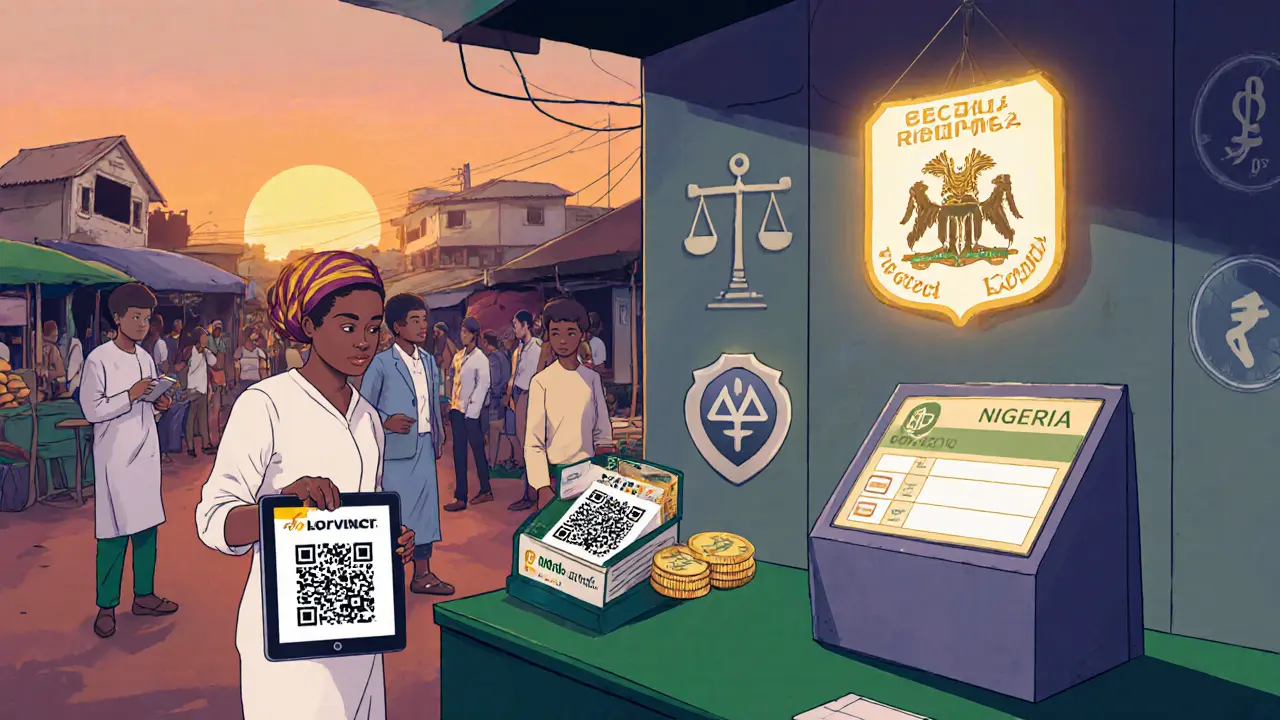
Nigeria doesn’t ban crypto. You won’t get arrested for sending Bitcoin to a friend or buying groceries with USDT. But here’s the catch: crypto isn’t money in the eyes of the government. The Nigerian naira is the only official currency. That means you can’t pay your taxes, utility bills, or government fees with Bitcoin. If you try, the agency will refuse it. But for private transactions-between individuals, businesses, or online stores? That’s where crypto thrives.Nigeria has been the world’s top country for peer-to-peer (P2P) crypto trading since 2021. In the year ending June 2025, over $92 billion in crypto flowed into the country. People use it to send money home from abroad, protect savings from inflation, and trade on global markets. The demand never went away-even when banks were told to cut off crypto users in 2021.
The Big Change: ISA 2025 Made Crypto Legal as a Security
The game shifted in March 2025 when President Tinubu signed the Investments and Securities Act (ISA) 2025. This law didn’t make crypto money. Instead, it classified digital assets as securities-just like stocks or bonds. That’s a huge deal. It means crypto isn’t in a legal gray zone anymore. It’s now regulated, monitored, and taxed under clear rules.The Securities and Exchange Commission (SEC) became the main boss for crypto. Now, every exchange, wallet provider, or payment processor that handles crypto in Nigeria must register with the SEC and get a license. Platforms like Quidax and Busha were among the first to get approved in late 2024. If you’re using a platform that hasn’t applied for a license, you’re taking a risk. The SEC can shut them down-and freeze user funds.
Banks Can Now Work With Crypto Companies (Finally)
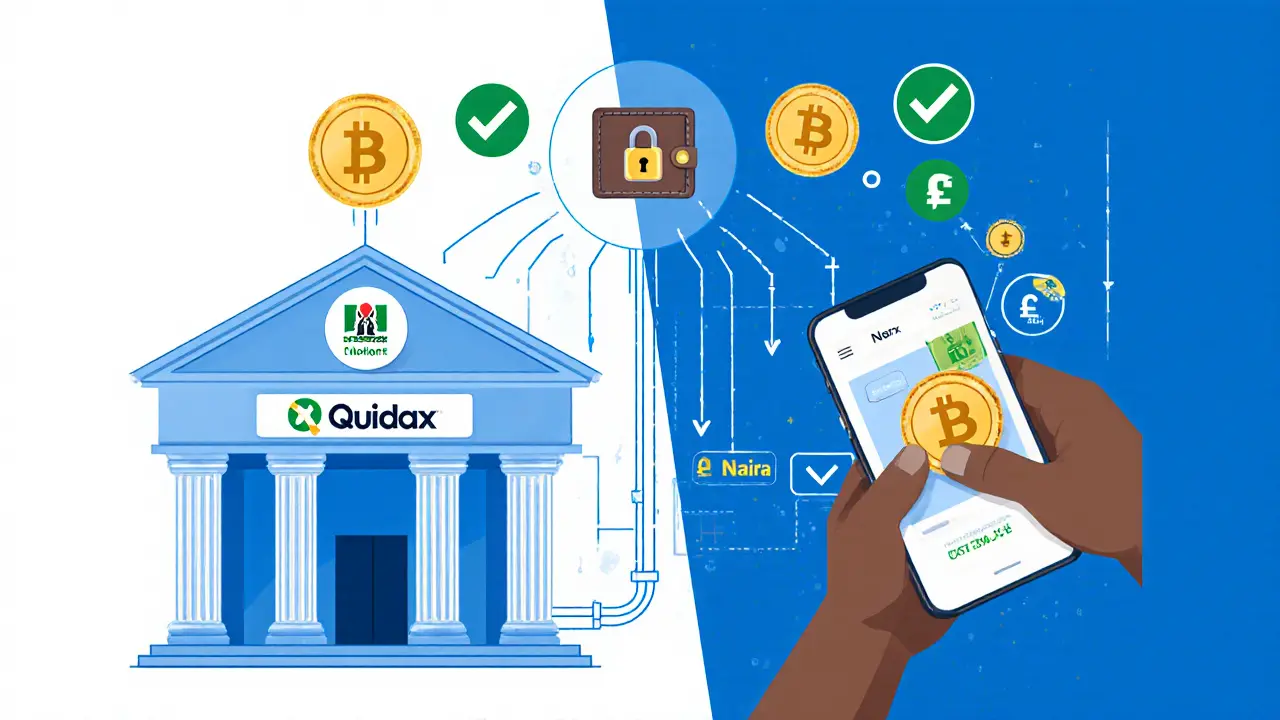
Before 2025, Nigerian banks were forbidden from serving crypto businesses. That made it hard to deposit naira to buy crypto or cash out profits. In December 2023, the Central Bank of Nigeria (CBN) reversed that ban-but only for SEC-licensed firms. Now, if a crypto company has a valid license, banks can open accounts for them, process payments, and even offer crypto-linked debit cards.This change made a real difference. Users can now link their bank accounts to licensed exchanges. You can buy crypto with your salary, sell it, and withdraw naira-all within one system. No more using P2P traders with cash meetups or risky escrow services. The system is becoming safer and more reliable.
Anti-Fraud Rules Are Tighter Than Ever
The government isn’t just allowing crypto-it’s cracking down on scams. The Nigerian Financial Intelligence Unit (NFIU) and the Economic and Financial Crimes Commission (EFCC) now have access to telecom records and transaction data from licensed platforms. If someone runs a fake crypto investment scheme-like a “double your Bitcoin in 7 days” Ponzi-they’re going to jail.Penalties for non-compliance are steep. A crypto firm that doesn’t register with the SEC gets fined ₦10 million ($6,693) in the first month. Then ₦1 million ($669) every month after that. Licenses can be suspended or revoked. Many smaller platforms have shut down because they couldn’t afford the compliance costs. That’s good for users: fewer scams, more trustworthy services.
Crypto Is Taxable-But Only When You Profit
Starting January 1, 2026, the Nigerian Tax Administration Act (NTAA) 2025 kicks in. This law says crypto is property, not currency. That means you don’t pay tax just for holding it. You pay when you sell, trade, or exchange it for profit.- If you’re an individual and you make ₦500,000 from selling Bitcoin, you pay personal income tax-up to 25% depending on your total earnings.
- If you run a business that accepts crypto as payment, you pay corporate tax: 20% if you earn between ₦25 million and ₦100 million a year, or 30% if you earn more.
- Any company charging fees for crypto transactions (like an exchange) must also charge 7.5% VAT on those fees.
Compared to countries like the U.S. or Germany, Nigeria’s crypto tax rules are surprisingly fair. You’re not taxed on every tiny trade. Only real profits count. The government isn’t trying to kill crypto-it’s trying to collect its share.
What This Means for Everyday Users
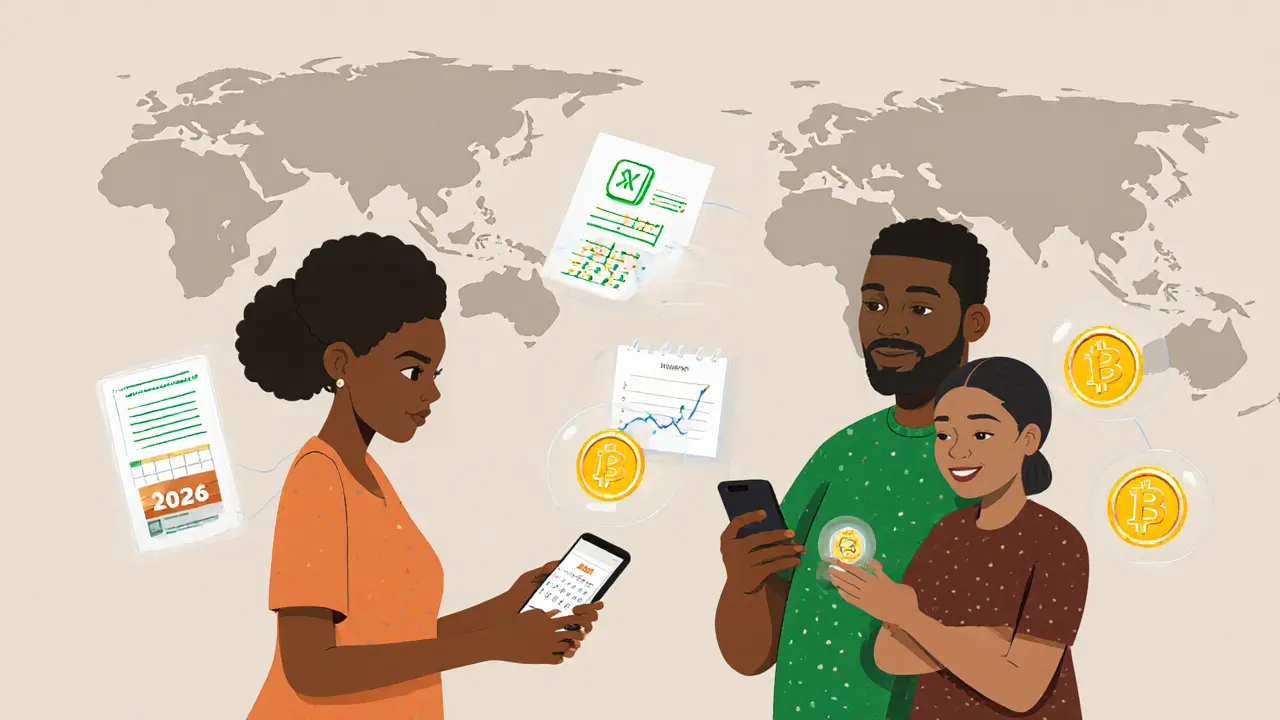
If you’re a regular Nigerian using crypto to send remittances, save money, or shop online, here’s what you need to do:- Only use SEC-licensed platforms like Quidax, Busha, or other approved exchanges.
- Keep records of all your buys, sells, and trades. You’ll need them for taxes in 2026.
- Avoid unregulated international platforms that don’t have a Nigerian license. They could disappear overnight.
- Don’t fall for “guaranteed returns” or crypto influencers promising quick riches. Those are scams.
Many users still prefer P2P trading because it’s faster and doesn’t require KYC. But the risk is higher. If someone disappears after you send naira, there’s no recourse. Licensed platforms offer dispute resolution and insurance for user funds.
What’s Next? More Clarity, But Slower Growth
The licensing process is taking longer than expected. Regulators are being careful. They’re checking every applicant’s security systems, financial records, and anti-fraud controls. That’s good for long-term stability, but it’s slowing down innovation.International exchanges like Binance or Kraken haven’t applied for Nigerian licenses yet. That means Nigerian users might lose access to some global features-like margin trading or staking rewards. But local platforms are catching up fast. Quidax now offers staking. Busha has integrated savings accounts with interest in crypto.
The real winners? Nigerian entrepreneurs building crypto tools for local needs: apps that let small businesses accept crypto payments without bank fees, wallets that auto-convert crypto to naira for daily spending, and educational platforms teaching people how to use crypto safely.
Bottom Line: Crypto Payments Are Legal-If You Play by the Rules
Nigeria didn’t ban crypto. It didn’t ignore it. It regulated it. And that’s a sign of maturity.You can use crypto to pay for goods, send money, or invest. Just make sure you’re using a licensed platform. Keep your records. Pay your taxes when you profit. Avoid scams. The system is no longer wild west-it’s a real market with rules, oversight, and consequences.
For the first time, Nigeria’s crypto users have protection. The government has revenue. And the industry has a future. All it takes is playing by the new rules.
Is it illegal to use Bitcoin in Nigeria?
No, it’s not illegal. You can buy, sell, hold, and use Bitcoin and other cryptocurrencies for private transactions. However, they are not legal tender, so you can’t use them to pay government bills or taxes. The law now treats crypto as a security, meaning it’s regulated, not banned.
Can Nigerian banks process crypto payments?
Yes-but only for businesses licensed by the SEC. Banks can now open accounts for crypto exchanges like Quidax and Busha, process deposits, and support withdrawals. But they still can’t deal with unlicensed platforms. If your crypto platform isn’t SEC-registered, your bank won’t help you.
Do I have to pay tax on my crypto profits in Nigeria?
Yes, starting January 1, 2026. You only pay tax when you sell or trade crypto for profit. Individuals pay up to 25% personal income tax on gains. Companies pay 20% or 30% corporate tax, depending on earnings. All crypto businesses must also charge 7.5% VAT on transaction fees.
Are crypto exchanges safe in Nigeria now?
Licensed exchanges are much safer. The SEC requires strict security standards, KYC verification, and insurance for user funds. Unlicensed platforms can be shut down at any time-and users may lose their money. Always check if your exchange is on the SEC’s official list of licensed VASPs.
What happens if I use an unlicensed crypto platform?
You’re not breaking the law by using one, but you’re taking a big risk. The SEC can shut down unlicensed platforms instantly. If that happens, your funds could be frozen or lost with no way to recover them. You also won’t have legal protection if you’re scammed. Stick to SEC-licensed services for safety.
Can I use crypto to pay for goods and services in Nigeria?
Yes, if the business accepts it. Many online stores, freelancers, and even some physical shops now accept USDT, BTC, or ETH. The law doesn’t stop private agreements. But remember: the seller must pay taxes on the income, and if they’re a business, they must be SEC-licensed if they’re running a crypto payment service.
Will crypto be banned again in Nigeria?
It’s very unlikely. The ISA 2025 and NTAA 2025 are permanent laws passed by the National Assembly. The government now has a working regulatory framework and collects tax revenue from crypto. Banning it would mean losing billions in economic activity and giving up control to unregulated black markets. The trend is toward regulation, not prohibition.
15 Comments
This is the most balanced take on Nigerian crypto I've seen in years. Finally, someone gets it - regulation isn't the enemy, laziness is. I used to trade on P2P with strangers in Lagos cafés, praying the guy wouldn't ghost me after I sent 500k naira. Now? I use Quidax, link my bank, and sleep like a baby. The government didn't kill crypto - they gave it a spine.
Why are we even talking about this? India banned crypto for a reason - it’s a Western scam dressed up as innovation. Nigeria’s just copying failed models. You think a license makes crypto safe? HA. The SEC is just another bureaucracy waiting to tax your dreams. Stick to naira, brothers. Real money.
Let’s be real: calling crypto a ‘security’ is semantic gymnastics. If it behaves like currency, acts like currency, and is used like currency - then it IS currency. The SEC’s labeling it a ‘security’ is a bureaucratic cop-out to avoid admitting they lost control. This isn’t regulation - it’s denial with a compliance checklist.
To every Nigerian reading this: YOU ARE NOT ALONE. I’ve watched friends lose savings to shady P2P traders, cried with cousins who couldn’t send money home, and celebrated when my cousin in Abuja finally bought her first laptop with USDT. This isn’t just about money - it’s about dignity. The system finally saw us. Now let’s use it right. 💪🏽❤️
My uncle just got arrested for running a crypto lending group. They say he didn’t have a license. But he helped 200 people save their rent money. Now they’re broke again. Who’s really protecting who here?
so like... if i buy btc and hold it forever do i owe taxes? like... forever? 😅
The philosophical tension here is fascinating: the state’s attempt to domesticate an inherently decentralized technology. By forcing crypto into the securities framework, Nigeria is attempting to impose a 20th-century regulatory paradigm onto a 21st-century asset class. This creates friction - not because the people resist, but because the architecture is mismatched. Will this model scale? Or will innovation migrate elsewhere, leaving only compliant, inert platforms behind?
Anyone else notice how the article never mentions that most people still use P2P because licensed exchanges charge insane fees? The ‘safe’ option is actually the expensive one. And don’t get me started on KYC - I just want to send my sister $50, not fill out a federal form.
Hey, if you're new to this - start small. Buy $10 worth of USDT on a licensed exchange. Learn how it works. Watch your first trade. Don't rush. The goal isn't to get rich tomorrow - it's to not get scammed today. You got this. 🙌
While the regulatory framework is indeed a significant development, one must not overlook the structural asymmetries it perpetuates. The licensing burden disproportionately impacts small operators, consolidating power within a few incumbent platforms. This is not financial inclusion - it is institutional capture under the guise of consumer protection. The market’s organic resilience has been co-opted, not liberated.
I’m from the US, but I’ve got family in Lagos. I used to send money via Western Union - $40 fee every time. Now I send USDT through Busha. They get naira in 2 minutes. No paperwork. No delays. I know the system’s not perfect, but it’s miles better than what we had. Let’s not throw the baby out with the bathwater.
I just want to say thank you to everyone who’s been fighting for this. I know it’s scary. I know it’s confusing. But you’re not alone. If you need help understanding taxes or picking a safe exchange, DM me. I’ve been there. I’ve lost money. I’ve cried. But I’m still here. You’re not alone. 💛
Of course it’s regulated now. Because the moment people started making real money, the state had to stick its nose in. You think they care about ‘protection’? They care about their cut. This isn’t progress - it’s colonization by tax code.
It is imperative to acknowledge that the formalization of crypto as a regulated asset class within Nigeria constitutes a paradigmatic shift in the nation’s monetary policy architecture. The transition from prohibition to structured oversight reflects a maturation of institutional cognition vis-à-vis emergent financial technologies. Nevertheless, the efficacy of such regulation remains contingent upon the integrity of enforcement mechanisms - a variable historically susceptible to rent-seeking behavior and bureaucratic inertia.
As a Nigerian-American, I’ve seen both sides. In the U.S., crypto’s a gamble. In Nigeria, it’s survival. The fact that the government didn’t crush it - but tried to guide it - says more about Nigerian resilience than any law ever could. We didn’t wait for permission. We built the system. Now they’re just trying to catch up.