
Archly Finance Review: Is It a Legit Crypto Exchange or High-Risk DeFi Protocol?

Is Archly Finance Actually a Crypto Exchange?
You probably landed here because you saw the name Archly Finance listed somewhere as a place to trade crypto. Maybe you heard it was a new exchange with high yields, or perhaps you found the ARC token and wondered where you could buy it. Here is the hard truth right out of the gate: Archly Finance is not a traditional centralized exchange like Binance, Coinbase, or Kraken. You cannot create an account, deposit fiat currency, and click 'buy' on a user-friendly dashboard.
Instead, Archly Finance is a decentralized finance (DeFi) protocol. Specifically, it operates as a cross-chain decentralized exchange (DEX). This distinction matters immensely for your wallet and your security. If you are looking for customer support, a forgot-password link, or a regulated entity to sue if things go wrong, you will find none here. You are entering the world of smart contracts, self-custody, and permissionless liquidity.
In this review, we will break down what Archly Finance actually does, analyze the massive red flags surrounding its current market data, explain its technical architecture, and help you decide if interacting with the ARC token is worth the risk in mid-2026.
The Core Problem: Liquidity and Market Reality
Before diving into the tech, let’s look at the numbers, because they tell a stark story. As of July 2026, the metrics for Archly Finance paint a picture of extreme illiquidity and negligible market activity. When you evaluate any crypto asset, liquidity is king. It determines whether you can actually sell your tokens without crashing the price.
| Metric | Value | Risk Level |
|---|---|---|
| ARC Token Price | $0.00001847 | High Volatility |
| 24-Hour Trading Volume | $0.00 | Critical |
| Total Liquidity | $120 - $174 | Extremely Low |
| Fully Diluted Valuation (FDV) | $1,468 | N/A |
| Circulating Supply | 109 Million ARC | High Inflation Risk |
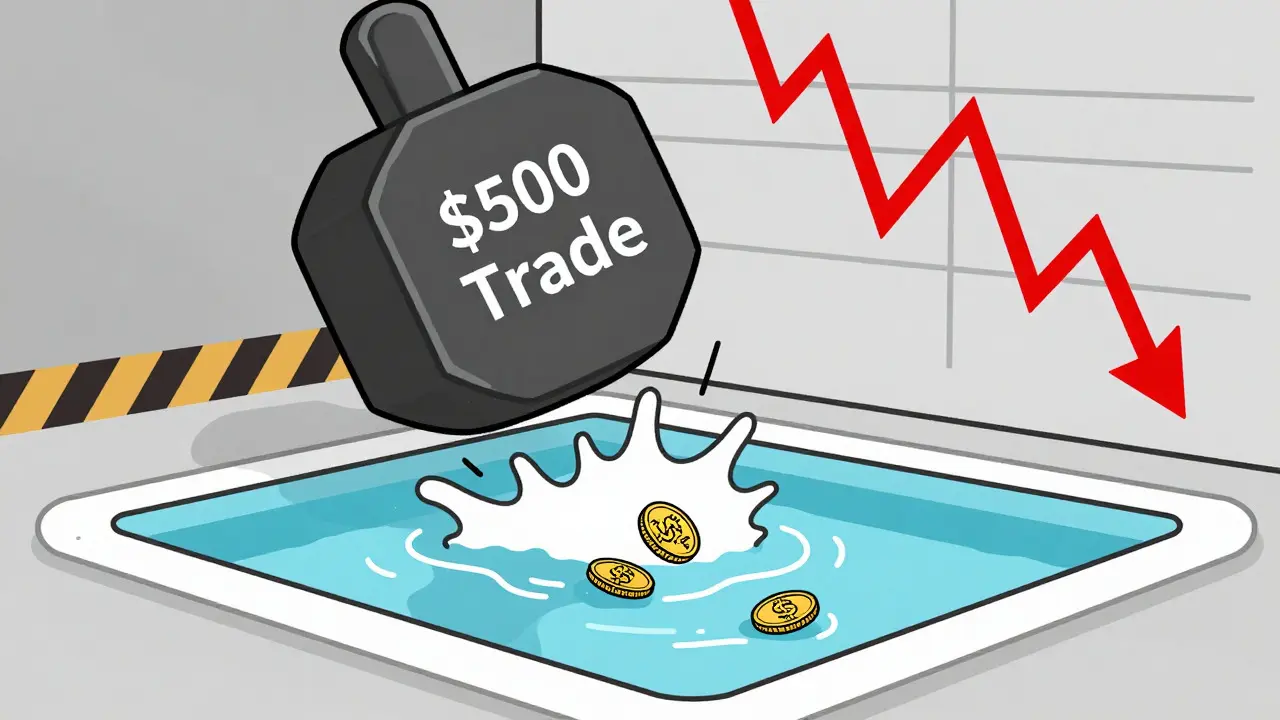
Look closely at that trading volume: $0.00. In the last 24 hours, essentially no one has traded the ARC token on major aggregators. The total liquidity sitting in the pools is between $120 and $174. To put that in perspective, a single retail trader buying $500 worth of ARC could theoretically drain the entire available liquidity and crash the price by 50% or more instantly.
Data aggregators like CoinGecko explicitly warn users that "liquidity of the token is low and prices may differ drastically." They advise proceeding with caution. For a platform promising to be a major player in cross-chain infrastructure, these numbers suggest either a project in its very early infancy, a failed launch, or a potential honeypot scenario where tokens can be bought but not easily sold.
What Is Archly Finance? The Tech Breakdown
If you ignore the scary market data for a moment, what is the product actually trying to build? Archly Finance positions itself as the first truly cross-chain ve(3,3) DEX. Let’s unpack that jargon, because it sounds impressive until you understand the mechanics.
ve(3,3) Model is a governance and incentive model derived from Curve Finance, where users lock tokens to gain voting power and rewards. In standard DeFi, liquidity providers earn fees. In ve(3,3), protocols incentivize users to lock their governance tokens (in this case, ARC) for long periods. These locked tokens become "vote-escrowed" (veARC). Holders of veARC get two things: a share of the trading fees generated by the protocol and the power to vote on which liquidity pools receive additional incentives from the protocol's treasury.
Archly Finance claims to take this model and make it "cross-chain." Most ve(3,3) protocols operate on a single blockchain, like Ethereum or Arbitrum. Archly aims to unify this across multiple EVM-compatible chains. Their ecosystem consists of three main pillars:
- Archly DEX: A permissionless liquidity solution. Any protocol can integrate Archly to provide liquidity for their specific tokens. It allows developers to incentivize liquidity without managing complex smart contract logic themselves.
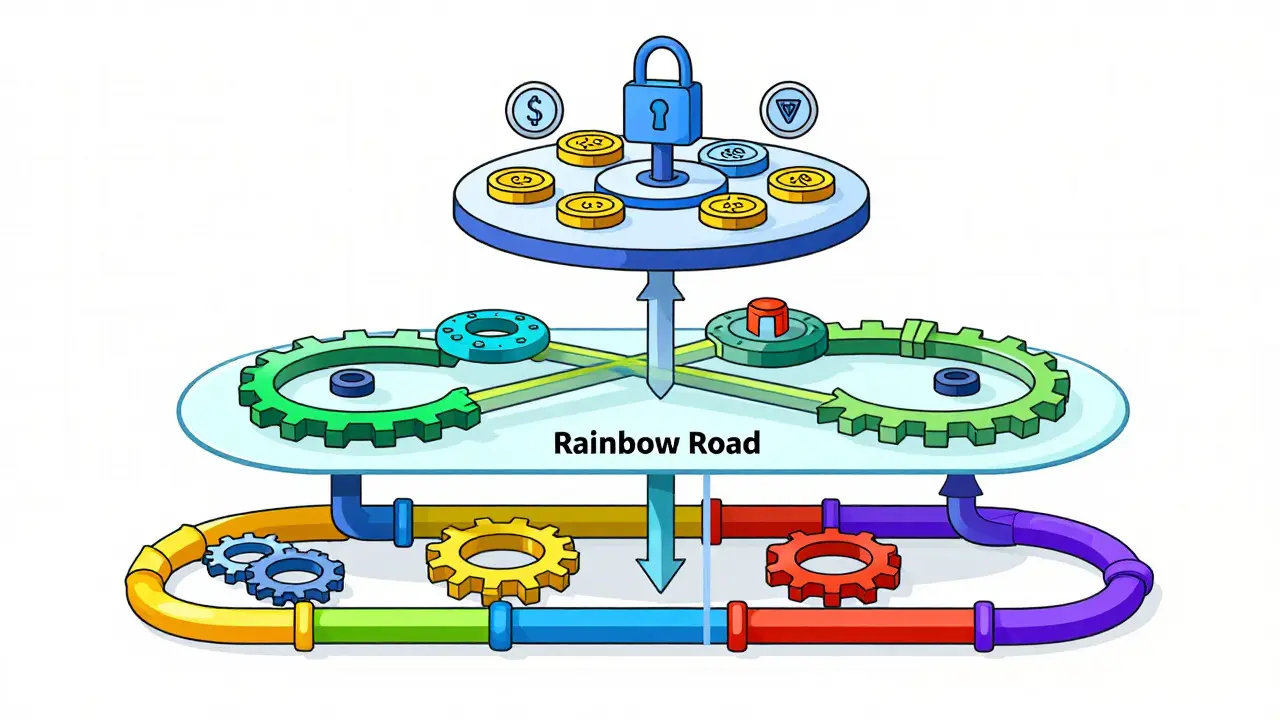
- Rainbow Road: An abstraction layer. Think of this as the plumbing. Instead of every app building its own bridge to talk to other chains, Rainbow Road integrates with underlying networks to facilitate seamless cross-chain experiences. It reduces the integration work for Web2 and Web3 apps.
- Reactor Chain: This is the upcoming component. It is described as an EVM-compatible blockchain specifically designed to host the ve(3,3) experience. Crucially, ARC will serve as the native gas token on Reactor Chain. Governance via veARC will extend across all supported chains, meaning a holder on Chain A can vote on incentives for a pool on Chain B.
Theoretically, this solves a real problem: fragmentation. Right now, if you want to provide liquidity on five different chains, you need five different wallets, five different sets of wrapped assets, and five different governance votes. Archly promises to unify this under one roof.
Security Risks and Smart Contract Vulnerabilities
In DeFi, "not your keys, not your coins" is the mantra, but so is "trust but verify." With Archly Finance, verification is difficult due to limited transparency regarding the team and audit history details.
The protocol documentation states that it has undergone "multiple security audits." However, it does not prominently list which firms conducted these audits or provide links to the full reports in public marketing materials. In the crypto space, unverified audit claims are common among lower-tier projects. More importantly, the legal disclaimer requires users to release the protocol and its contributors from liability. This is standard for DeFi, but combined with the low liquidity, it means if a bug exploits your funds, you have zero recourse.
There are also significant risks associated with the cross-chain nature of the project. Cross-chain bridges and messaging layers have historically been the biggest targets for hackers. If Rainbow Road relies on third-party oracle data or bridge mechanisms that are not fully decentralized, the attack surface expands dramatically. A vulnerability in the abstraction layer could potentially affect assets across multiple connected chains simultaneously.
Furthermore, consider the governance risk. Since veARC holders control the flow of incentives, a small group of whales who lock up a large percentage of the supply could manipulate the system. They could direct all incentives to a single pool, pump the price of a specific token, and then dump it. Given the tiny circulating supply and low liquidity, this manipulation would be incredibly easy to execute.
Tax Implications and Regulatory Gray Areas
You might think that because Archly is obscure, tax authorities don’t care. Wrong. Blockchain analysis tools used by the IRS and other global tax bodies scan all public ledgers. Tax service providers like Blockpit and Crypto Tax Calculator have already built integrations for Archly Finance transactions.
This means every swap, every liquidity provision, and every reward claim on Archly is recorded permanently. If you interact with the DEX, you are generating taxable events. Because the token has near-zero volume, calculating the fair market value of your trades for tax purposes could be a nightmare. If you buy ARC when the price is $0.000018 and sell it later, determining the exact USD value at the second of execution might require digging through deep order book data that doesn't really exist.
Additionally, regulatory clarity around ve(3,3) tokens is still evolving. Are ARC tokens securities? Utility tokens? Governance rights? Different jurisdictions answer this differently. In New Zealand, Australia, and the US, the lines are blurry. Engaging with a protocol that lacks clear regulatory status adds a layer of compliance risk to your personal financial profile.
Who Is Archly Finance For? (And Who Should Stay Away)
Let’s be realistic about the audience. Archly Finance is currently not suitable for:
- Retail Investors Seeking Safety: If you want to park money and earn steady yield, the $150 liquidity pool is too small. One large withdrawal could wipe out your position.
- Beginners: Navigating cross-chain DeFi, bridging assets, locking tokens for governance, and managing gas fees on multiple chains is complex. Doing this on a micro-cap protocol amplifies the chance of user error.
- Traders Needing Liquidity: With $0 daily volume, slippage will eat your profits. You likely won't find a buyer for significant amounts of ARC.
It might be interesting for:
- DeFi Degens and Early Adopters: Those willing to risk small amounts ($10-$50) for the possibility of 100x returns if the Reactor Chain launches successfully and gains traction.
- Developers: Teams looking for a permissionless way to bootstrap liquidity on niche EVM chains might test the Rainbow Road infrastructure.
- Governance Speculators: Users interested in studying how cross-chain ve(3,3) models evolve might participate in the voting mechanisms to learn, rather than to profit immediately.
Comparison: Archly vs. Established DeFi Protocols
To understand where Archly stands, compare it to established players in the ve(3,3) space, such as Curve Finance or Convex Finance.
| Feature | Archly Finance | Curve Finance / Convex |
|---|---|---|
| Liquidity Depth | $120 - $174 | Billions of USD |
| Cross-Chain Native Support | Yes (via Rainbow Road) | Limited (mostly single-chain focus) |
| Token Maturity | Early Stage / Illiquid | Mature / Highly Liquid |
| User Base | Minimal | Millions of Users |
| Risk Profile | Extreme (Smart Contract + Liquidity) | Low to Medium (Smart Contract only) |
Curve dominates stablecoin swaps with billions in TVL (Total Value Locked). Archly is attempting to innovate on the *architecture* of cross-chain governance, but it lacks the fundamental economic engine-liquidity-to compete yet. Until Reactor Chain goes live and attracts substantial institutional or whale capital, Archly remains a speculative experiment rather than a viable financial tool.
Final Verdict: Proceed With Extreme Caution
Archly Finance is not a scam in the traditional sense of a fake website stealing login credentials. It is a legitimate codebase attempting to solve real interoperability problems in DeFi. However, calling it a "crypto exchange" is misleading. It is a nascent, highly illiquid DeFi protocol with significant technical and financial risks.
If you decide to interact with Archly Finance, treat it as venture capital, not investing. Only allocate funds you are prepared to lose entirely. Expect high volatility, difficult exits due to low liquidity, and complex tax reporting. Keep a close eye on the development of the Reactor Chain; if that launches with strong partnerships and liquidity injections, the narrative could change. Until then, the $0 trading volume speaks louder than any whitepaper promise.
Is Archly Finance a centralized exchange like Binance?
No. Archly Finance is a decentralized finance (DeFi) protocol. There are no accounts, no customer support, and no fiat on-ramps. You interact directly with smart contracts using a self-custody wallet like MetaMask.
Why is the Archly Finance (ARC) token price so low?
The price is low primarily due to extremely low liquidity and trading volume. With only ~$150 in total liquidity and $0 daily volume, there is little demand driving the price up. The high circulating supply of 109 million tokens also contributes to the low per-token valuation.
What is the Reactor Chain in Archly Finance?
Reactor Chain is an upcoming EVM-compatible blockchain developed by Archly. It is designed to host the ve(3,3) governance mechanism natively, allowing ARC to serve as the gas token and enabling seamless cross-chain voting and operations within the ecosystem.
Is Archly Finance safe to use?
Safety in DeFi is relative. While the protocol claims to have undergone audits, the lack of prominent audit reports and the extreme illiquidity pose significant risks. Smart contract bugs, governance manipulation, and bridge vulnerabilities are real threats. Users should assume high risk.
How do I pay taxes on Archly Finance transactions?
Transactions on Archly are public on the blockchain. Tools like Blockpit and Crypto Tax Calculator support Archly data imports. Every swap, reward claim, or liquidity provision is likely a taxable event depending on your local laws. Due to low liquidity, accurately valuing these transactions for tax reports can be challenging.
Can I buy ARC with USD directly?
Not directly. You must first acquire a base cryptocurrency like ETH or WETH on a centralized exchange, transfer it to a compatible EVM chain, and then swap it for ARC on the Archly DEX or another decentralized exchange where it is listed.