
Almeedex Review: Is This Crypto Exchange Legit or a Scam?

When a new name pops up in the crowded crypto exchange space, the first question is always the same: Almeedex review - does it belong on your watchlist or should you steer clear? This article breaks down everything you can actually verify about Almeedex, points out the red flags that most users miss, and gives you a clear roadmap for deciding whether to trust a fledgling platform.
Key Takeaways
- Almeedex has virtually no presence on major tracking sites like CoinMarketCap or CoinGecko.
- No public regulatory filings, audited financials, or verifiable customer‑support channels have been found.
- Established exchanges such as Binance, Coinbase, Kraken and KuCoin consistently meet verification standards that Almeedex currently does not.
- Before depositing any funds, run the five‑step verification checklist outlined below.
- If you value security and regulatory compliance, stick with exchanges that publish transparent data.
What Is Almeedex?
Almeedex is a cryptocurrency exchange platform that claims to offer spot trading, margin trading, and a native token for reduced fees. The website presents a sleek UI, offers support for major coins like Bitcoin, Ethereum, and USDT, and advertises 24/7 customer service. Beyond that, publicly‑available information is scarce.
Red Flags: The Missing Information Puzzle
In the crypto world, the absence of data is often louder than any warning sign. A legitimate exchange usually appears on at least one of these pillars:
- Listing on CoinMarketCap or CoinGecko, showing daily volume, order‑book depth, and historical performance.
- Registration with a recognized regulator - the UK’s FCA, the US SEC, or equivalent bodies in the exchange’s operating jurisdiction.
- Active community discussion on Reddit’s r/cryptocurrency, r/Bitcoin, or dedicated Discord channels.
- Independent user reviews on platforms like Trustpilot, G2, or Capterra.
- Security audits performed by firms such as Chainalysis or CipherTrace.
Almeedex is missing from every one of those sources. A quick search of CoinMarketCap’s 500+ listed exchanges, the 700+ on CoinGecko, and the major regulatory databases returns no results for Almeedex. Even a generic Google search yields only the exchange’s own landing page and a handful of dubious forum posts.
How to Verify a Crypto Exchange - Five‑Step Checklist
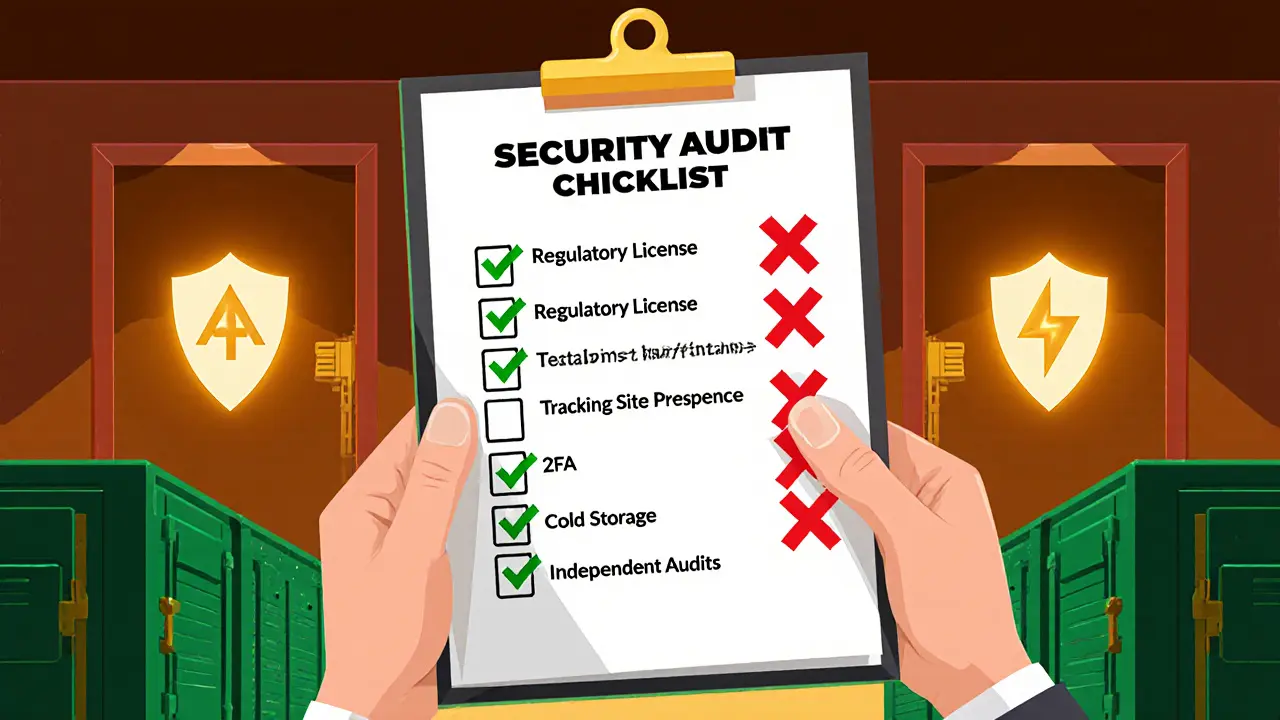
Before you ever click “Deposit,” run this quick audit:
- Regulatory registration: Look up the exchange’s business name in the official regulator’s database. Verify a licence number.
- Tracking site presence: Check CoinMarketCap and CoinGecko for volume data and user‑generated ratings.
- Security credentials: Confirm the use of SSL (HTTPS), two‑factor authentication (2FA), and cold storage for the majority of user funds.
- Community footprint: Search Reddit, Telegram, and Discord for active, unbiased discussion threads. Genuine platforms have mixed positive and negative feedback.
- Independent audit reports: Look for published audit results from firms like Chainalysis or FATF‑compliant KYC/AML statements.
If an exchange fails more than one of these steps, treat it with extreme caution.
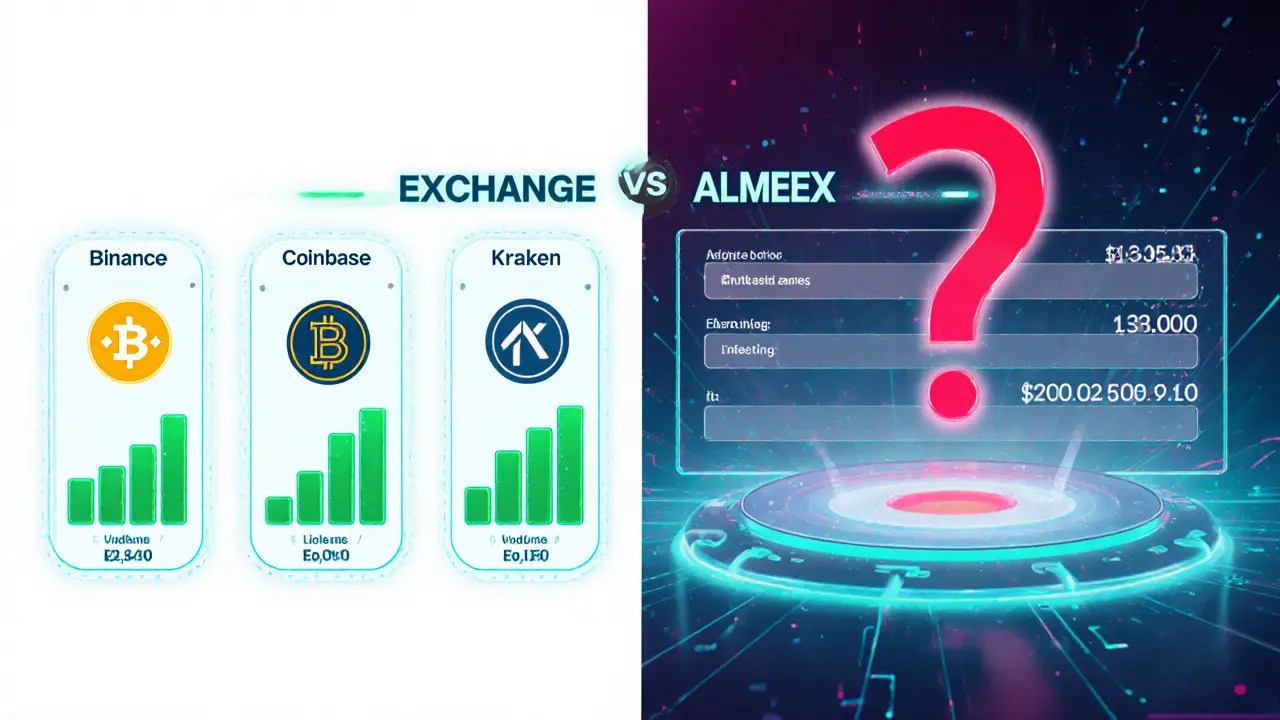
Side‑by‑Side Comparison: Almeedex vs. Established Exchanges
| Exchange | Daily Volume (USD) | Year Founded | Regulatory Status | User Base (approx.) |
|---|---|---|---|---|
| Binance | $76 billion | 2017 | Multiple licences (Cayman Islands, Malta, US‑registered entities) | >100 million |
| Coinbase | $3.2 billion | 2012 | Registered with US SEC, state‑level money‑transmitter licences | ~73 million |
| Kraken | $1.5 billion | 2011 | US FinCEN, EU‑licensed, FCA‑registered | ~9 million |
| KuCoin | $2.1 billion | 2017 | Operating in multiple jurisdictions; limited licences | ~10 million |
| Almeedex | N/A | Unknown | Not publicly disclosed | Unknown |
The table makes it crystal clear: while the industry giants publish transparent data, Almeedex leaves every cell blank. That lack of transparency is itself a data point.
Security Measures You Should Expect
Even if a platform looks polished, real security comes from concrete practices:
- Two‑factor authentication (2FA): A mandatory step for log‑in and withdrawals.
- Cold storage: At least 95% of user funds kept offline.
- KYC/AML compliance: Verification of identity, source of funds, and ongoing transaction monitoring, often overseen by bodies like the FATF.
- Regular security audits: Independent firms (e.g., Chainalysis) should publish findings or at least attest to compliance.
If you can’t find evidence of any of these on Almeedex’s site or documentation, treat the platform as high risk.
Alternatives Worth Considering
For traders who want a blend of low fees, high liquidity, and regulatory peace of mind, the following exchanges rank consistently in 2024 reviews:
- Binance: Best for volume and diverse altcoins, but beware of regional restrictions.
- Coinbase: Ideal for beginners and those who prefer a US‑regulated environment.
- Kraken: Strong security track record and good fiat on‑ramps.
- KuCoin: Good for emerging tokens and competitive fees.
All of them appear on CoinMarketCap, have published KYC procedures, and have been audited by reputable security firms.
Final Verdict on Almeedex
Based on the data (or lack thereof) available as of October 2025, Almeedex fails the fundamental verification checklist that protects users from exit scams and regulatory trouble. Until the exchange publishes verifiable licensing details, trading‑volume statistics, and third‑party security audits, the safest move is to keep your funds on a well‑established platform.
Frequently Asked Questions
Is Almeedex a regulated exchange?
No public records show Almeedex holding a licence from any major regulator such as the FCA, SEC, or MAS. Without that evidence, it cannot be classified as regulated.
Can I trust the security claims on Almeedex’s website?
The site mentions SSL and 2FA, but there are no independent audit reports or details about cold storage. Those omissions are red flags; it’s safer to use exchanges that publish third‑party audit results.
How do I check if an exchange is listed on CoinMarketCap?
Visit coinmarketcap.com, use the search bar, and look for the exchange’s profile. A legitimate exchange will show daily volume, market pairs, and a historical chart.
What are the most common signs of a crypto exchange scam?
Typical signs include: no regulatory licence, missing volume data on tracking sites, lack of user reviews, promises of guaranteed returns, and pressure to deposit large sums quickly.
Should I keep a small amount of crypto on a new exchange for testing?
Even a test deposit carries risk. If you choose to experiment, limit the amount to a fraction of what you can afford to lose and withdraw quickly after confirming withdrawals work.
22 Comments
Oh great, another ‘revolutionary’ exchange that vanishes from every tracking site. Looks like Almeedex is the perfect hobby for those who enjoy chasing ghosts.
While the red flags are obvious, there are still folks who hope for transparency. If Almeedex ever opens up its books, it could earn some trust. Until then, stick with platforms that have proven track records.
Almeedex is a textbook scam lacking any legit credentials.
Wow, the hype around that platform is insane, but let’s stay grounded! Remember, you can always protect yourself by using the five‑step checklist, enabling 2FA, and never depositing more than you can afford to lose! Keep those safeguards in place, and you’ll be far less vulnerable to any shady moves.
It is imperative that any exchange seeking user confidence must provide verifiable licensing and audited financial statements. The absence of such documentation is a breach of fiduciary duty and should dissuade potential investors.
Take this as a learning moment; always run the five‑step checklist before depositing. By doing so you protect yourself and set a higher standard for the industry. Keep the safeguards up.
I can’t shake the feeling that there’s a coordinated effort to hide Almeedex’s true ownership. The lack of regulation is not an accident; it’s a deliberate veil.
The best approach is to cross‑reference the exchange name with official regulator databases and demand proof of compliance. Without that, it’s prudent to stay clear.
From a risk‑management perspective, the absence of third‑party audit reports, coupled with non‑inclusion on liquidity aggregators, significantly elevates counterparty risk. Stakeholders should prioritize exchanges that publish transparent KYC/AML frameworks and demonstrate on‑chain security attestations.
The data presented unequivocally indicates that Almeedex fails to meet the minimum regulatory and operational standards required for a trustworthy cryptocurrency exchange.
Seriously??? This so‑called exchange disappears from every reputable index!!! No licence?? No volume?? No credibility??? It reads like a ghost town!
The modern crypto ecosystem thrives on the delicate balance between anonymity and accountability.
The moment an entity like Almeedex surfaces without a trace in any public ledger, that balance is severely disrupted.
One must consider the historical patterns of financial fraud, where opacity has always preceded loss.
The absence of a regulatory footprint is not merely a bureaucratic omission; it is a strategic concealment.
Investors internalize risk through signals such as listed volume on reputable aggregators.
Without those signals, the subconscious assessment of safety tilts toward suspicion.
Moreover, the psychological comfort derived from third‑party audits cannot be overstated.
A missing audit report is akin to a silent scream in a crowded room.
Even if the user interface appears polished, true security lies in cold storage practices and multi‑signature governance.
The literature on exit scams emphasizes that the most sophisticated platforms often mimic legitimacy to lure capital.
Almeedex’s lack of community discourse on established forums removes a critical peer‑validation layer.
In the grand tapestry of decentralized finance, trust is woven from verifiable threads.
When those threads are absent, the tapestry unravels before any investment is made.
Therefore, prudence dictates that one refrains from depositing funds until transparency is demonstrably restored.
Patience, though costly in missed opportunities, safeguards against irreversible loss.
Ultimately, the decision to engage with a platform must rest on documented evidence, not on hopeful speculation.
Sounds sketchy.
The current evidence suggests that Almeedex does not satisfy the compliance criteria established by major financial jurisdictions.
Wow, that reads like a thriller! Let's keep the conversation alive and share any new findings as soon as they surface!
Honestly, this whole thing feels like a busted meme that got taken too seriously.
i think u should double check the url and make sure its not a phishing site lol
Sticking with well‑known exchanges is a smart move, especially when you value both security and regulatory clarity.
Contemplating the nature of trust in digital markets reveals that transparency is not a luxury but a foundational requirement.
Dear community, let us remain vigilant and demand evidence; only then can we safeguard our assets 🌟🚀.
Oh sure, because a missing licence totally screams legitimacy 😂👍.
Do not be fooled by glossy marketing; demand proof of registration and walk away if it isn’t provided.