
20-27 Million Crypto Users in Pakistan: Why It Matters
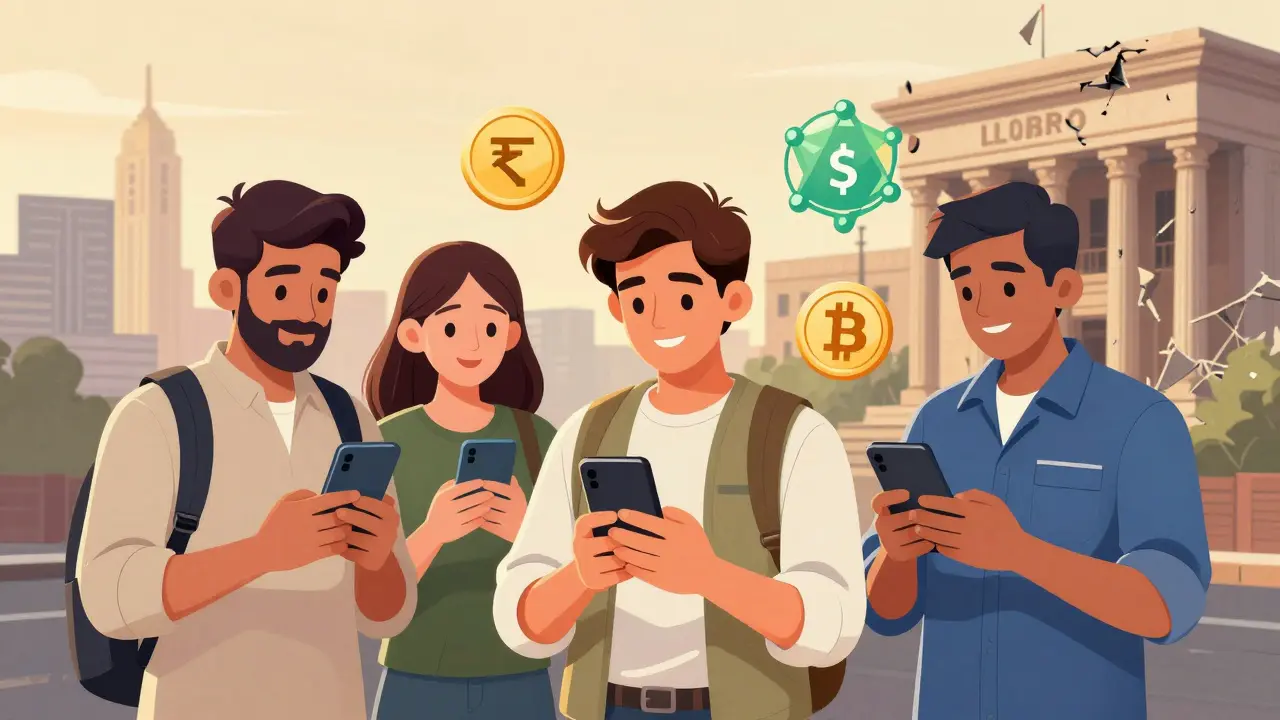
More than 20 million people in Pakistan are using cryptocurrency. Some estimates put the number as high as 27 million. That’s roughly one in every ten Pakistanis. Not because they’re chasing get-rich-quick schemes, but because they have no other choice. The rupee is falling. Banks are slow. International payments? Nearly impossible through traditional channels. So people turned to Bitcoin, USDT, and other digital assets - not as investments, but as lifelines.
Why Pakistan? The Real Reason Crypto Took Off
It’s not about tech hype. It’s not about young people wanting to trade memes. It’s about survival. Pakistan’s inflation hit over 30% in 2024. The rupee lost nearly half its value against the dollar in just two years. People saw their savings evaporate. Banks didn’t help. Foreign currency was hard to get. And yet, millions of Pakistanis - mostly freelancers, students, and small business owners - found a way out: crypto.
Think about this: a graphic designer in Lahore works for clients in the U.S., Canada, and Europe. They get paid in dollars. But if they try to cash out through a bank, they face delays, fees, and sometimes outright rejections. Crypto? They get paid in USDT. They sell it locally on peer-to-peer platforms like Paxful or LocalBitcoins. Within hours, they have rupees in their pocket. No middlemen. No paperwork. No waiting weeks.
This isn’t rare. It’s normal. A 2025 report found that over 60% of crypto users in Pakistan use it primarily for receiving international payments. Another 25% use it to protect their savings from inflation. Only 10% trade for speculative gains. That’s the opposite of what you see in the U.S. or Europe.
The Numbers Don’t Add Up - And That’s the Point
You’ll hear different numbers. Some say 18.2 million. Others say 40 million. Why the gap?
Because most crypto use in Pakistan happens outside exchanges. People don’t sign up for Binance or Coinbase. They use WhatsApp groups, Telegram channels, and local P2P platforms. A guy in Faisalabad buys USDT from a neighbor who works at a crypto cafe. The neighbor gets rupees in cash. The buyer sends the USDT to their brother in Dubai. No bank account needed. No KYC. No trace.
That’s why official numbers are low. They only count users on regulated platforms. They miss the underground network that keeps the system alive. The real number? Probably somewhere between 20 and 27 million. And it’s growing fast - over 5 million new users joined in 2025 alone.
The Government’s Dilemma: Ban It or Control It?
In 2022, the State Bank of Pakistan tried to ban crypto. They told banks to block transactions. They threatened legal action. Did it work? No. People just moved to cash-based P2P trades. More people got involved.
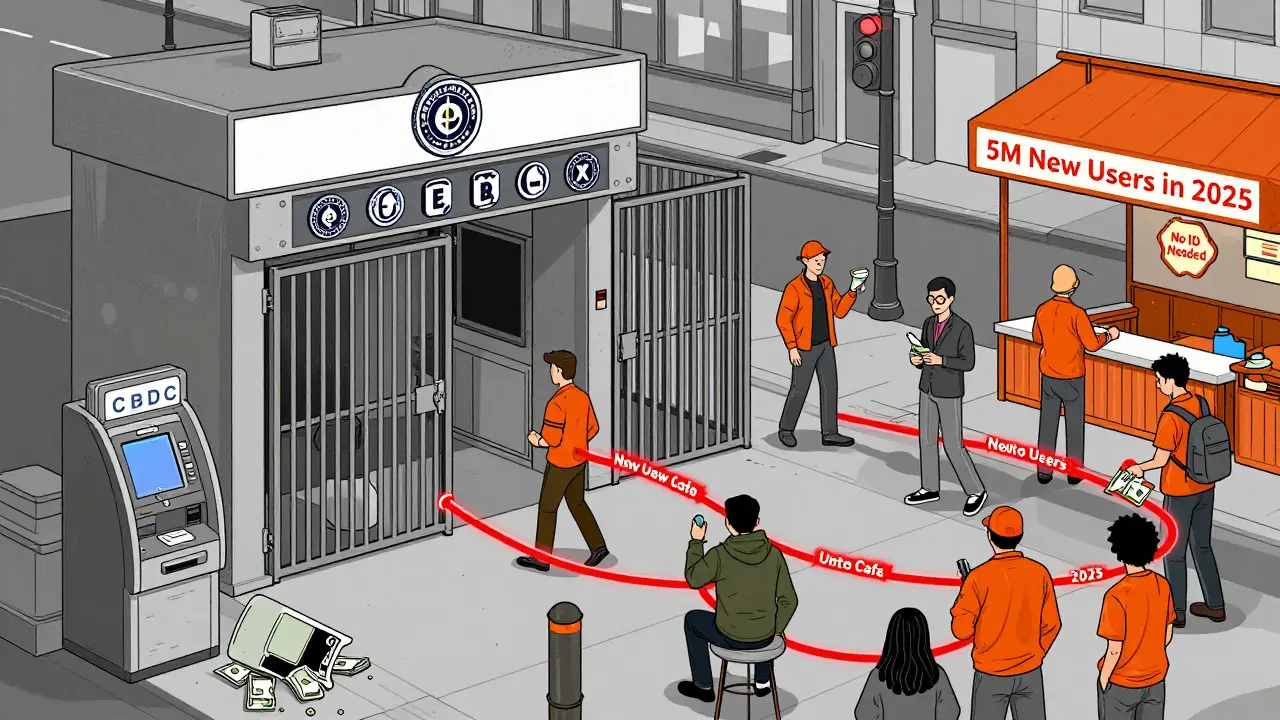
Today, the government is stuck. They can’t stop crypto. But they don’t want to lose control. So now, they’re building their own digital currency - a central bank digital currency (CBDC) - set to launch in late 2025. The goal? Replace crypto with something they can monitor, tax, and control.
But here’s the problem: a CBDC won’t fix the real issues. It won’t make international payments faster. It won’t protect savings from inflation. And it won’t help freelancers who need to get paid in dollars. Crypto already does all that. Why replace it with a government-controlled version that still requires bank links and ID checks?
For now, the rules are unclear. No official ban. No legal status. Just silence. And in that silence, crypto keeps growing.
Who’s Using Crypto in Pakistan? It’s Not Who You Think
Most articles talk about “tech-savvy youth.” That’s true - but incomplete.
It’s also the single mom in Rawalpindi who runs a home-based tailoring business and gets paid in crypto from clients in Saudi Arabia. It’s the university student in Multan who tutors English online and gets paid in Bitcoin. It’s the mechanic in Peshawar who uses crypto to buy parts from Turkey because banks won’t let him transfer money.
These aren’t traders. They’re everyday people using crypto as a tool. Like a phone or a car. Not because it’s cool. Because it works.
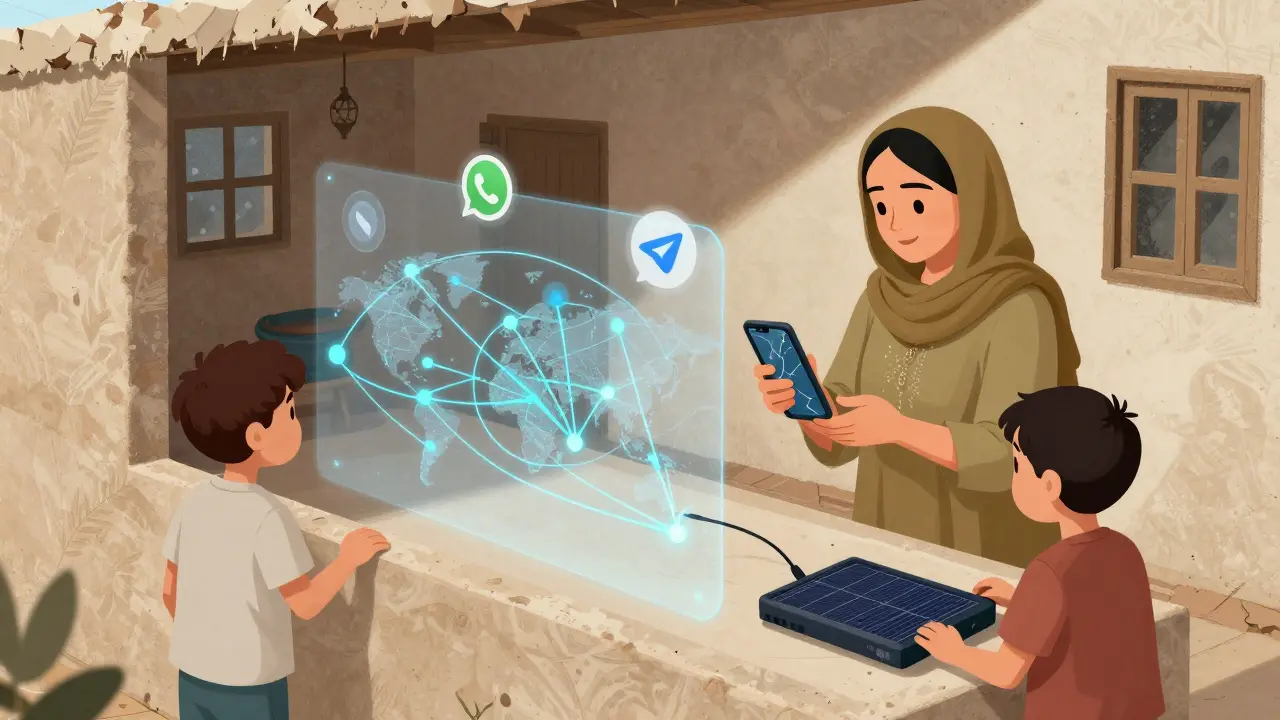
And it’s not just cities. Even in towns with spotty internet, people find ways. They use mobile data. They meet in person. They use SMS-based crypto services that don’t need apps. The infrastructure is weak, but the need is stronger.
What’s Holding It Back? Internet, Not Attitude
Pakistan has over 255 million people. Only 45.7% have reliable high-speed internet. That’s the real bottleneck. Not fear. Not distrust. Just bad connections.
Imagine trying to send a crypto transaction on a 3G network that drops every 10 minutes. Or paying for a USDT transfer while your phone overheats because the charger is broken. These aren’t edge cases. They’re daily realities for millions.
That’s why adoption is uneven. Karachi and Lahore have crypto cafes, local exchanges, and WhatsApp groups with hundreds of active members. But in rural Sindh or Balochistan? People know about crypto. They want to use it. But they can’t.
Fix the internet, and the numbers will explode. Even without government support.
The Future: Will Crypto Survive?
Some say the government will crack down. Others say CBDCs will replace crypto. Both are wrong.
Crypto in Pakistan isn’t a trend. It’s a response to systemic failure. As long as inflation stays high, banks remain slow, and international payments stay locked behind red tape, people will keep using crypto. No law can change that.
The real question isn’t whether crypto will survive - it’s whether Pakistan’s leaders will stop treating it as a threat and start seeing it as a solution.
For now, 20 to 27 million people are already making that choice. They’re not waiting for permission. They’re building their own financial system - one transaction at a time.
14 Comments
Crypto in Pakistan? Bro it's just survival mode. No banks? No rupee? Just send USDT and move on. Simple.
Oh wow, so the government’s CBDC is gonna save everyone... while they sit in a fancy office sipping tea and pretending they didn’t cause this mess. Classic.
You're all missing the macrostructural implications. The decentralized finance paradigm in emerging markets is a direct response to rent-seeking institutional failures. The rupee's depreciation isn't just inflation-it's a systemic collapse of monetary sovereignty, and crypto is the emergent counter-institution. Also, P2P liquidity pools outperform SWIFT by 300% in latency and cost efficiency.
This is one of the most beautiful examples of grassroots innovation I've ever seen. People aren't chasing moonshots-they're building lifelines with their phones and WhatsApp groups. No one handed them this. They just saw a problem and hacked together a solution. That’s human ingenuity at its purest. We should be cheering this, not panicking about it.
I love how the real story isn't about tech-it's about moms, mechanics, and students just trying to get paid. That’s the heart of it. Crypto isn't the future here. It's the present. And it's beautiful.
This is why America needs to stop coddling third-world economies. If they can't manage their own currency, they shouldn't be allowed to use ours. Crypto is just anarchy with better PR.
bro honestly i never thought about how hard it is to get paid from abroad if your bank just says no. crypto is like the only thing keeping people alive out there. mad respect
Let me just say, as someone who’s seen this in emerging markets before-this is textbook informal economic resilience. The CBDC is a predictable bureaucratic overreach. You can't regulate what doesn't exist on your ledger. Also, the 3G transaction failure rate is a fascinating case study in infrastructural adaptation.
It is my solemn duty to state, with the utmost formality, that the emergence of decentralized financial mechanisms in contexts of institutional collapse constitutes a profound and historically significant socio-economic phenomenon. One cannot help but admire the tenacity of the human spirit in the face of systemic dysfunction.
I think about the guy in Balochistan, trying to send USDT over a 3G connection that cuts out every time his phone gets warm. He’s not trying to get rich. He’s trying to feed his kids. And he’s doing it with a cracked screen and a dying battery. That’s not innovation. That’s heroism. And we don’t even know his name.
I’m not convinced this isn’t just a regulatory arbitrage play. The fact that 60% use it for payments doesn’t mean it’s ethical. It means the state failed. And now people are using a black market to patch a hole in the system. That’s not freedom-that’s desperation dressed up in blockchain.
You people are naive. This isn't 'grassroots innovation.' This is an economic free-for-all. No oversight. No accountability. Just chaos. And when it collapses, who gets blamed? The West? The US? No. The people who tried to help. This is why we can't have nice things.
The emotional weight of this piece is undeniable. To witness entire communities constructing alternative financial ecosystems out of sheer necessity-while governments remain paralyzed-is both moving and terrifying. One cannot help but feel the gravity of human resilience in the absence of institutional support.
It’s not about crypto. It’s about dignity. When you can’t trust your own currency or your own banks, the only thing left is autonomy. And that’s worth more than any policy.